 English

October comes fast. If you leave the garden until November, you are already behind, because the jobs that protect a garden through winter all have a deadline that the first frost sets for you. This is the season where a few focused weekends of garden maintenance in Northampton save a spring of repairs, so here are the five jobs that matter most, in the order they should be done.
1. The final lawn cut, followed by an autumn feed
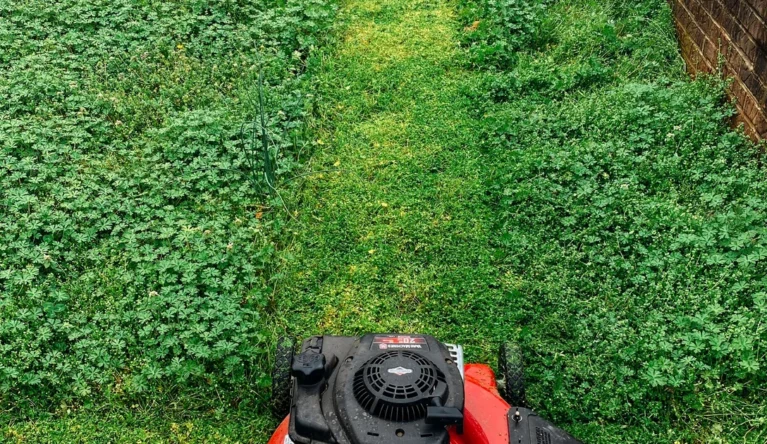
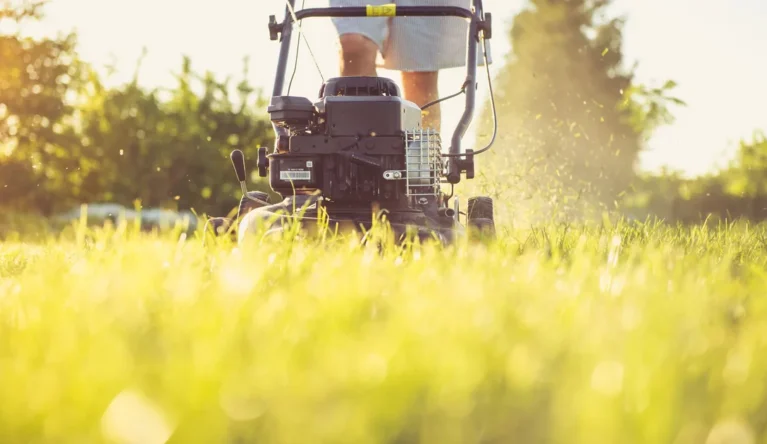
The last cut of the year is the one that sets the lawn up for spring. Around late October or early November, once growth has slowed, give the lawn a final trim with the mower set slightly higher than your summer height.
The timing matters because grass needs to go into winter with enough length to protect itself, but not so long that it mats under rain. Cutting too short now weakens the roots and invites moss into the gaps all winter. Cutting too late, after frost arrives, risks tearing the blades and leaving brown tracks until spring.
Follow the final cut with an autumn lawn feed, low in nitrogen and higher in phosphates. The grass stops growing above ground but the roots keep working through mild autumn weather, which is exactly when good feeding pays off. Blunt blades make all of this worse, so sharpen the mower before this last cut. Our seasonal lawn care guide for Northamptonshire covers the full year, and if lawn care has been a struggle, a professional visit now can include a treatment to fix moss and compaction before winter locks them in.
2. Clear the leaves before they smother the lawn
Leaves look harmless in October and cause lasting damage by January. Left on a lawn, they block light and air, trap moisture against the grass, and create the damp, dark conditions that moss and fungal disease love.
The lawn is not the only victim. Leaves on paths and patios turn into a genuinely dangerous, slippery layer once the rain starts, and gutters blocked by leaves are the cause of most winter damp problems. Clear the lawn weekly through the fall while the leaves are still coming down, and clear paths and patios after every storm. Compost or bin the leaves rather than piling them in a corner, and if the volume is heavy, book it as a single autumn clearance visit.
3. The last hedge trim of the year
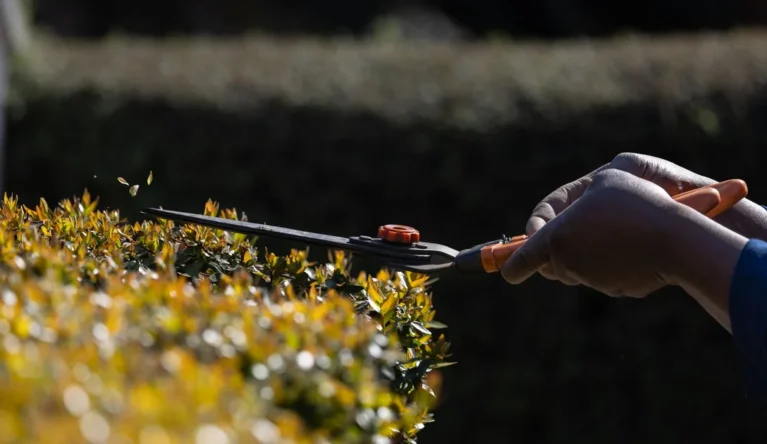
After the main nesting season has ended, the autumn window runs through to November, and it is the second of the two ideal times to cut most hedges. A tidy now holds both shape and line through winter.
Resist the urge to cut hard into old wood on conifers late in the season, since that leaves dead patches that will not regrow. Light and regular beats heavy and late, every time. The full detail on each hedge type and its own timing is in our seasonal hedge cutting guide.
4. Jet wash the patio and paths before the frosts
Algae and moss build up quietly through the wet months, and a green film on block paving or stone becomes a genuine slip hazard when combined with autumn rain or a frosty morning.
Jet washing now does two things: it removes the slippery growth before it gets fully established, and it prepares the surface for the winter. If your patio is block paved, the joints can be re-sanded after washing, which locks the blocks in place and prevents weed growth pushing up through the gaps. This is one task far better done in October than in February, when the surface is wet for weeks at a time.
5. Cut back perennials and mulch the borders
Perennials that have finished flowering have two possible futures. Leave them standing and they provide seed heads and winter interest for the birds. Cut them back, and the borders look tidier and start spring cleaner.
Either way, autumn is the moment to top up the mulch. A few centimetres of bark or leaf mould over the border soil suppresses winter weeds, feeds the soil as it breaks down, and protects roots through the coldest weeks. Mulching now also means less weeding to do when spring arrives, which is a gift to your future self. Leave any tender plants in place until spring unless a hard frost is forecast, and give pots a lift or a sheltered corner so their roots do not freeze.
What it costs to hand the list over
Individually, these jobs fit inside a standard single visit. As a 2026 guide, a one-off gardening visit in Northamptonshire typically runs £50 to £150 depending on the work involved, and regular fortnightly maintenance in the growing season costs £55 to £95 per visit.
Booking the five jobs together as one autumn tidy is the most cost-effective way to do it, because travel, set-up, and waste removal are shared across all of it. A garden set up properly in October needs far less work in March. The wider calendar of what a Northampton garden needs, month by month, is in our garden maintenance guide, and our gardening and landscaping service covers autumn tidy-ups, leaf clearance, hedge trimming, lawn treatments, and jet washing.
Want the garden winter-ready without giving up your weekends? Book autumn garden maintenance in Northampton or call us on 07743 636769, Monday to Saturday, 8am to 7pm. We cover all NN postcodes and the surrounding Northamptonshire area.